Aḥarey Mōs-Kdōshim and Sodomy / אחרי מות־קדשים און מישכּבֿ־זכר
The parsha about sodomy


This is a weekly series
of parsha dvarim written by a frum, atheist, transsexual anarchist. It's crucial in these times that we resist the narrative that Zionism owns Judaism. Our texts are rich—sometimes opaque, but absolutely teeming with wisdom and fierce debate. It's the work of each generation to extricate meaning from our cultural and religious inheritance. I aim to offer comment which is true to the source material (i.e. doesn't invert or invent meaning to make us more comfortable) and uses Torah like a light to reflect on our modern times.
An appeal
My friend Kamal needs help to leave Gaza. He is trying to immigrate to Greece to search for his missing son, who in desperation took a small and dangerous lifeboat across the Mediterranean. Last week he told me that he's tired from hunger and hasn't eaten in two weeks. Please donate what you can.

Content note: Homophobia, mention of genocide in Palestine
It's a difficult parsha this week.
There is plenty to talk about that avoids what I think are the most obvious and pressing lines in Torah, or at least the lines that cause me the most tsures personally.
We could instead discuss ethics, guilt, and tsedoke (charity). The goat of Azozeyl takes on the sins of the Jewish people and is abandoned to the wilderness. We are instructed to observe an annual day of self-denial and purification (Yom Kipur). Hashem gives us rules about sacrifices. Honor your parents and elders. Keep Shabos. Do not glean the edges of our fields, for they are to be left for the poor and the hungry stranger. Don't eat blood. Don't steal. Don't falsely swear Hashem's name or defraud another Jew. Pay wages on the same day as the work is done. Don't hold a grudge. Don't mix linen and wool fibers. Don't do divination or turn to ghosts. Don't destroy the corners of your beard or sell your daughter into sex work. Love your neighbor. The land is "flowing with milk and honey", and we will obey lest we be spewed out from it.
We are also given a long list of prohibited carnal relationships with women based on kinship: do not "uncover the nakedness" of your father by seeing your mother naked; nor your father's wife, your sister, your son's daughter, your father's wife's daughter, your mother's sister, your father's brother's wife, your son's wife, or your brother's wife. Do not uncover the nakedness of mothers and daughters together, nor sisters.
The following pasukim loom over the entire Torah for me. There is both so much and not much to say about them:
...
וְאִ֗ישׁ אֲשֶׁ֨ר יִשְׁכַּ֤ב אֶת־זָכָר֙ מִשְׁכְּבֵ֣י אִשָּׁ֔ה תּוֹעֵבָ֥ה עָשׂ֖וּ שְׁנֵיהֶ֑ם מ֥וֹת יוּמָ֖תוּ דְּמֵיהֶ֥ם בָּֽם׃
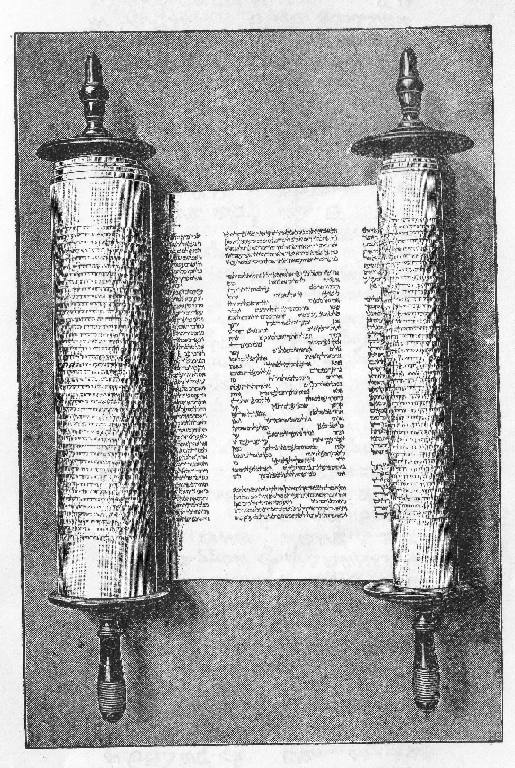
Immediately after this first line about lying with men, we are told not to have sex with animals. The context of the pasuk used to justify homophobia is also used to link gay sex with bestiality. But we could also make an alternative link: the pasuk comes after a long list of forbidden relations with women. The next line could be read as we are not to have sex with the men we are related to either. This is a reading I heard from my friend, teacher, and Torah scholar Lexi Kohanski, which she heard years ago. I couldn't find attribution to the idea.
As a faggot, I am personally invested in finding alternate readings to these pasukim, but I can't compromise my integrity. If Torah intended to be neutral on gay sex and only forbid incest, then it could have listed "your mother's wife" or other same-sex relationships; it does not. There is a lot of homoeroticism in our text—Dovid and Yoynoson, Rus and Naomi, the marriage of the Jewish people with Hashem—but nowhere in Torah are we given explicit queer marriages.

There is a lot to be said on what makes a marriage, or what makes a man or a woman. We could speak at length about why Torah says that sex with your mother is "uncovering the nakedness of your father". I am not an expert on gender and sexuality in antiquity, but I think it is safe to say that people have been having gay sex since long before Torah was given at Sinai. If gay sex weren't a common practice, then there would be no reason to prohibit it. (By this logic, incest and bestiality were also common enough to warrant explicit prohibition, which is uncomfortable but probably not untrue.)
Torah repeats—like a refrain—that we must shun the social norms of our goyishe neighbors when they are in conflict with the laws of Hashem. We are warned of the social contagion of normalizing "abominable" goyishe behavior like idol worship. Gay sex is placed in this category.


Photos by Hashem el Madani (1928–2017), Lebanon. Left: unknown title and date. Right: "Tarho and El Masri", 1958.
This is the end of the public preview. Sign up for $5 a month to read the full dvar and support trans antizionist Tōrah scholarship.
Money shouldn't a barrier to accessing writing, art, and culture. If $5 a month isn't sustainable for you, please email me and I'll send you the link to sign up for free.