Terumo and Distance / תרומה און דיסטאַנץ
Holiness is not a place.

This is a weekly series of parsha dvarim written by a frum, atheist, transsexual anarchist. It's crucial in these times that we resist the narrative that Zionism owns Judaism. Our texts are rich—sometimes opaque, but absolutely teeming with wisdom and fierce debate. It's the work of each generation to extricate meaning from our cultural and religious inheritance. I aim to offer comment which is true to the source material (i.e. doesn't invert or invent meaning to make us more comfortable) and uses Torah like a light to reflect on our modern times.
An appeal: It's nearly Ramadan and our comrades in Gaza don't have what they need. Please donate to my friends Mahmoud and Areej to help their families, and to other campaigns for Gazans if you're able to. Even $5 adds up to make a big difference.
Content note: mention of genocide
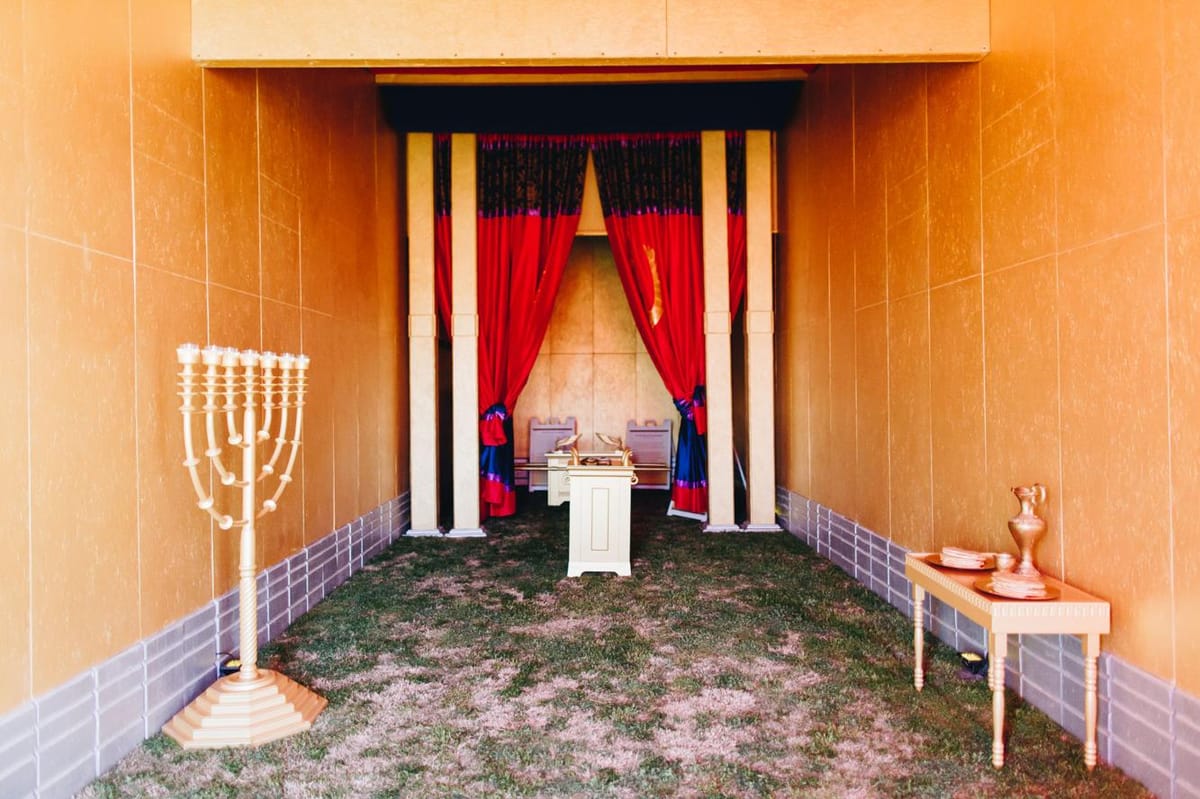
The parsha this week is a detailed list of instructions regarding the Mishkon ("tabernacle"), the portable holy tent which preceded the Beys haMikdosh (the Temple); and the thirteen offerings we can make to Hashem. We're without narrative.
Temuro is about diaspora. We are wandering in גלות—exile, a state all Jews are still in until Moshiakh comes (if he ever comes). We shlep around with our holiest place on our backs. Our geographic location is not as important as what we carry with us: our cultures, our words, our memories. Our most precious objects are intangible.
Holiness is not a place. It is a collection of words forming a memory, and the actions we take today to honor them. We remember and forget and reinvent our words. We offer some of them to Hashem and (more importantly) to each other. Hashem might not be here but we are, and I'm glad so many of us are committed to making "here" better.
וְהֵֽבֵאתָ֤ אֶת־הַבַּדִּים֙ בַּטַּבָּעֹ֔ת עַ֖ל צַלְעֹ֣ת הָאָרֹ֑ן לָשֵׂ֥את אֶת־הָאָרֹ֖ן בָּהֶֽם׃
בְּטַבְּעֹת֙ הָאָרֹ֔ן יִהְי֖וּ הַבַּדִּ֑ים לֹ֥א יָסֻ֖רוּ מִמֶּֽנּוּ׃
then insert the poles into the rings on the side walls of the ark, for carrying the ark.
The poles shall remain in the rings of the ark: they shall not be removed from it.
Shemoys 25:13–15
We are not rooted, and the Mishkon, our holiest place and the dwelling of divinity, moves with us. In the event of disaster where we cannot break down and transport the Mishkon, we can (we must) take the ark. The ark houses the Torah and is permanently in a state of readiness. The Torah is more important than the physical dwelling and all its gold. It is the only physical object which matters, but it isn't really physical at all: it's a collection of words.
The Mishkon was designed to be portable and temporary, in contrast with the physically fixed (but still temporary) Beys haMikdash. Today, our holiest site isn't a physical location but Shabos, "a palace in time". It is separate from the mundane not geographically but temporally, and in our words and actions.
This is the end of the public preview. Sign up for $5 a month to read the full dvar and support trans antizionist Tōrah scholarship.
Money shouldn't a barrier to accessing writing, art, and culture. If $5 a month isn't sustainable for you, please email me and I'll send you the link to sign up for free.