Vyeshev and Dressing Well / וישב
If you love yourself, you should dress accordingly.

This is a weekly series
of parsha dvarim (Tōrah commentaries) written by an orthodox atheist transsexual anarchist, with guest posts from comrades. It's the work of each generation to extricate meaning from our cultural and religious inheritance, and it's crucial that we resist the narrative that Zionism owns Judaism. We aim to offer comment which is true to the pshat (i.e. engages with the plain meaning of the text, especially when it's difficult) and uses Tōrah like a light to reflect on our modern times.
Read more commentary on parshas Vyeshev
Last year I wrote about onanism and harlotry.
An appeal
My friend Lina needs help surviving in Gaza. Any amount you can give helps tremendously.
Content note
Mention of slavery
Clothes are nothing short of art.
Your fashion choices betray your soul, and you can't opt out of revealing yourself through clothes any more than you could through the way you walk or talk. For the astute observer, there is data in the choice of fiber, texture, colors, prints, buttons, and of course the cut—where the waist sits, how tight or baggy an item is, how long and what shapes, the size of the cuffs and collars. The lines. The drape.
Your clothes situate you in time—both the moment they're made and the moment you wear them—and your relationship to history and trends. Fashion is the combination of and contrast between the choices you make to create an outfit. It's a conversation with the past and with modernity.
Our priorities are written in cloth or, unfortunately and all too often, plastic: comfort, practicality, visibility, elegance, affinity, convenience. Your relationship with your body, your culture, and your desire to be perceived (or not) is on display. By simply looking at someone, you can tell how much thought they put into their appearance. Judgement ensues. Careful: not enough effort and you're boring and sloppy; too much and you're vain.
Bereshis 37:23–24
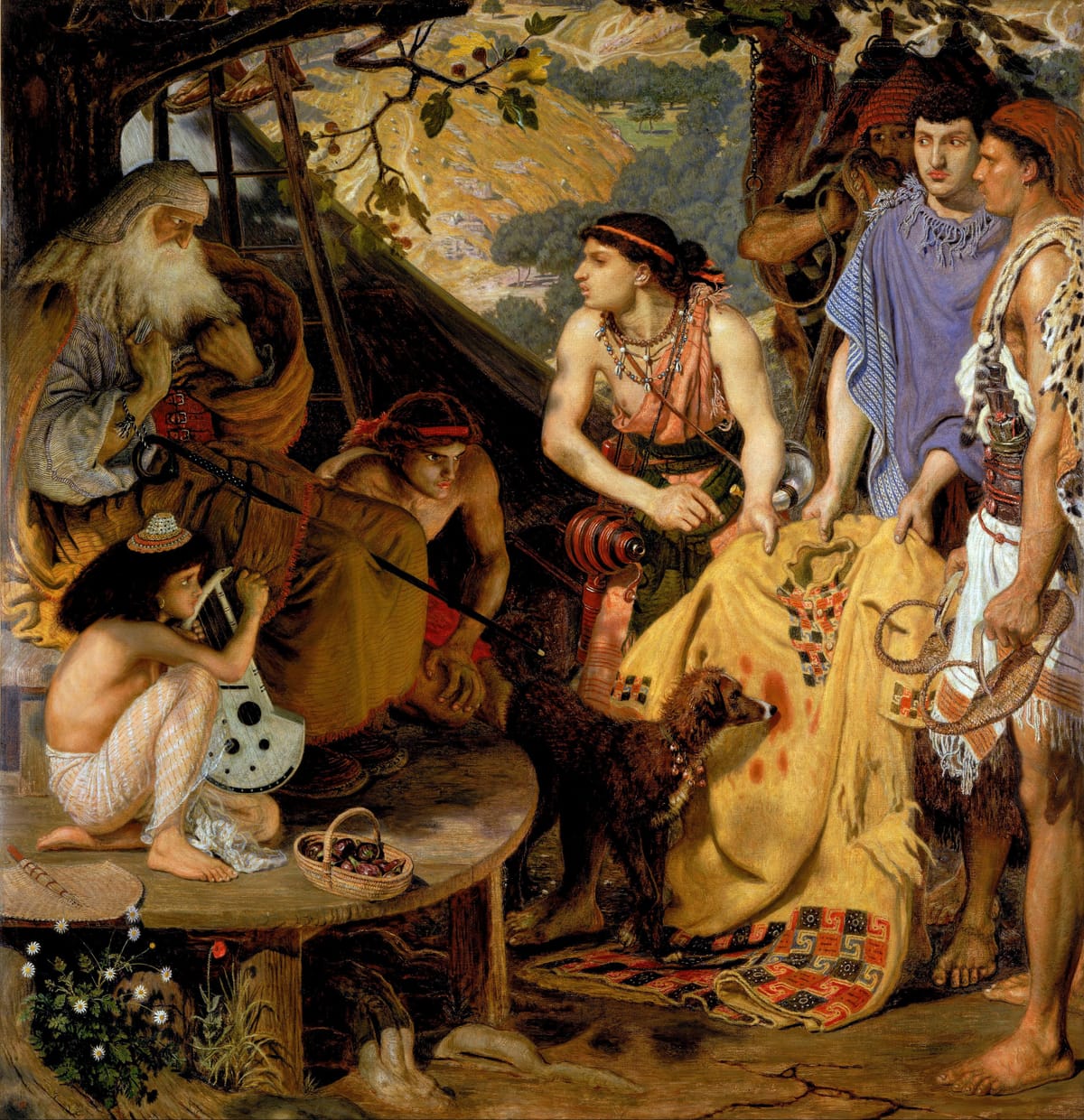
Yōsef is the favored son of Yaakov because he's the firstborn to his favorite wife, Rokhl. Yōsef is presented as uncomplicated victim-cum-hero. His father makes him a lovely coat. His jealous brothers consider killing him and ultimately decide to fake his death and sell him into slavery. They take his coat and stain it with blood to convince their father that his favorite boy is dead.
The theft of Yōsef's coat is a strategic choice to explain his disappearance, but it is also a direct attack on his worth as a person: he goes from the most beloved son of the patriarch to an anonymous slave. Twenty-two years later, he ascends again.
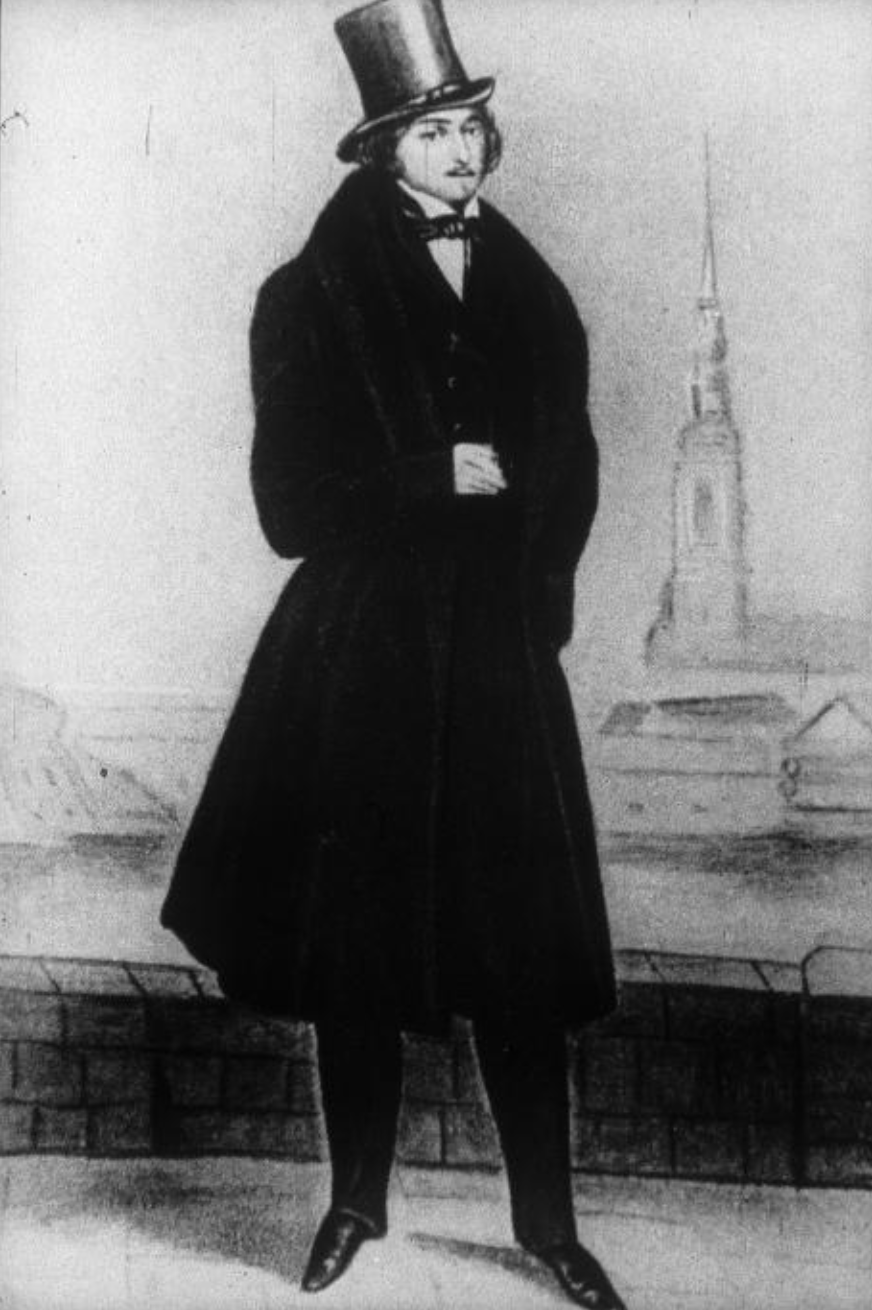
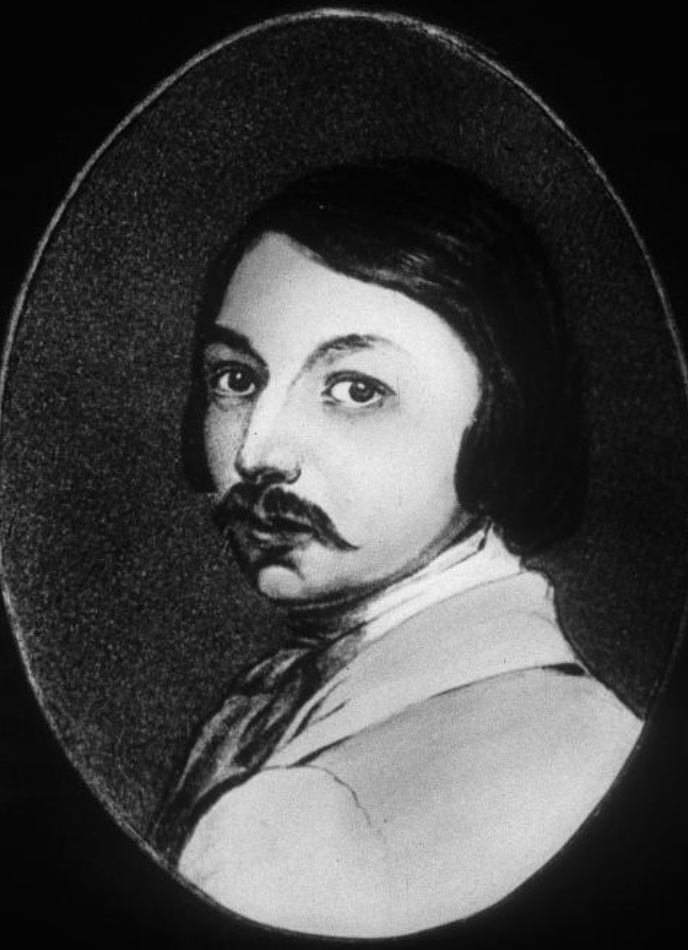
Portraits of Nikolai Gogol, Imperial Russia. Left: c.1830s. Right c.1820s. Notice the nipped waist and dramatic flare in Gogol's overcoat.
This part of the parsha is echoed in another story, "The Overcoat" by Nikolai Gogol, 1842. Gogol's protagonist, Akakiy Akakievitch of St. Petersburg, is not very like Yōsef: instead he is older, ugly, inarticulate, and lacking in aspiration. But Akakiy is, like Yōsef, disliked. He works a civil service job as a copier:
Outside this copying, it appeared that nothing existed for him. He gave no thought to his clothes: his undress uniform was not green, but a sort of rusty-meal colour. The collar was low, so that his neck, in spite of the fact that it was not long, seemed inordinately so as it emerged from it, like the necks of those plaster cats which wag their heads, and are carried about upon the heads of scores of image sellers. And something was always sticking to his uniform, either a bit of hay or some trifle. Moreover, he had a peculiar knack, as he walked along the street, of arriving beneath a window just as all sorts of rubbish were being flung out of it: hence he always bore about on his hat scraps of melon rinds and other such articles.
He gave no thought to his clothes, which was a reflection of how he gave no thought to his life. He neglected himself. People responded accordingly.
This is the end of the public preview. Sign up for $5 a month to read the full dvar and support trans antizionist Tōrah scholarship.
Money shouldn't a barrier to accessing writing, art, and culture. If $5 a month isn't sustainable for you, please email me and I'll send you the link to sign up for free.