Nōaḥ and Righteous intervention / נח און רעכפֿאַרטיקער אַרײַנמיש
We should be angry when our ancestors—those in Torah, and those commenting on Torah—fail to do right by us.

This is a weekly series
of parsha dvarim (Tōrah commentaries) written by an orthodox atheist transsexual anarchist, with guest posts from comrades. It's the work of each generation to extricate meaning from our cultural and religious inheritance, and it's crucial that we resist the narrative that Zionism owns Judaism. We aim to offer comment which is true to the pshat (i.e. engages with the plain meaning of the text, especially when it's difficult) and uses Tōrah like a light to reflect on our modern times.
Read more commentary on parshas Nōaḥ.
Content note
Zionism, genocide, abusive father
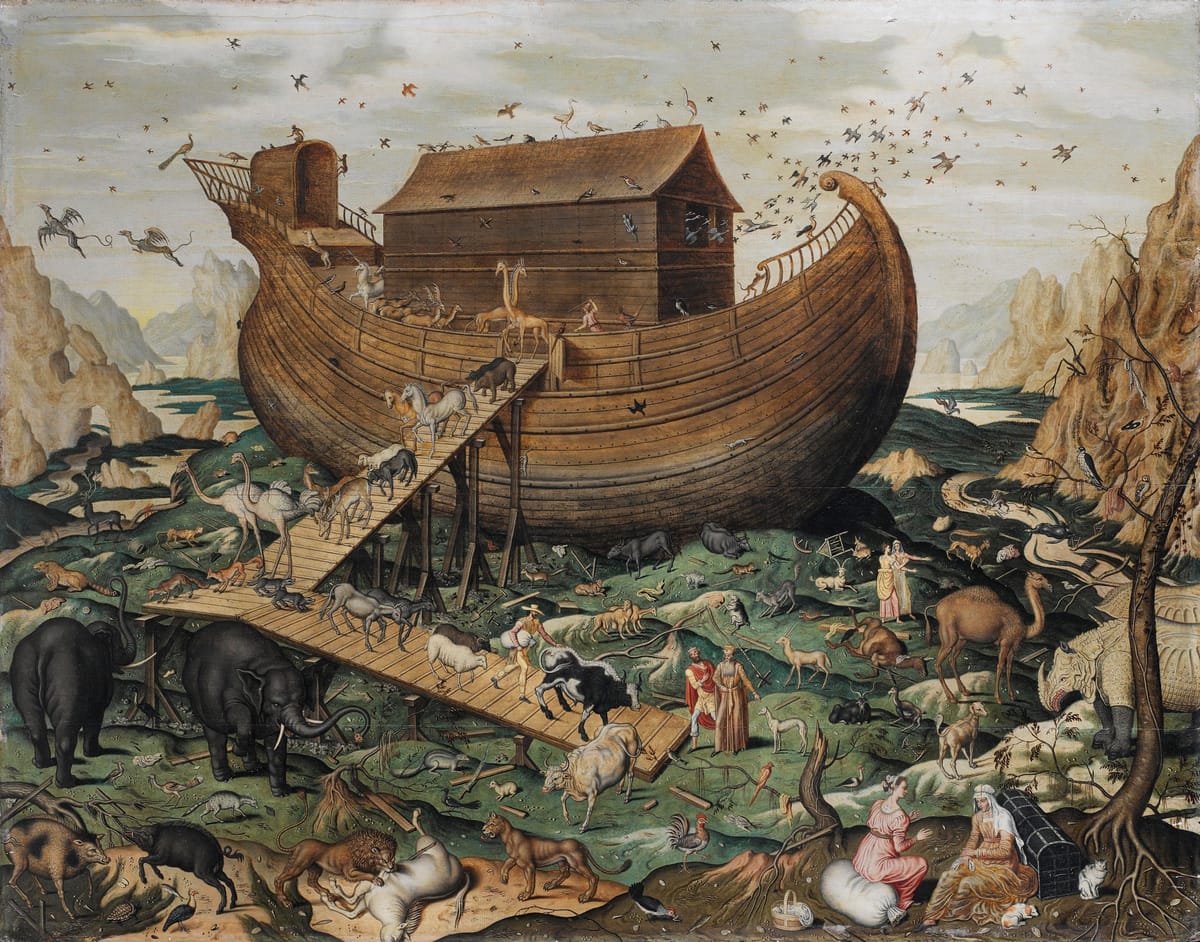
Nōaḥ and the flood
Bereshis 6:9
There's a lot happening this week: the ark; the animals and their genders; the world's first seed bank; the raven and the doves; the Tower of Bovel; and near the end, we meet our first matriarch and patriach, Soroy and Avrom.
The first part of the parsha is dedicated to Nōaḥ and the flood. I'm mad at Nōaḥ. He is “just" and "perfect" compared to the violence and corruption that surrounds him. When Hashem tells him that he will flood the Earth and kill everyone except for Nōaḥ's immediate family, Nōaḥ doesn't protest. He "walked with God". I'm mad at God too.
Zohar, Nōaḥ 25:181
The Zohar is also mad at Nōaḥ. In Bereshis, he's not held accountable, but it's our tradition to remedy that: Yishayohu (aka Isaiah) literally names the harm of Nōaḥ's negligence. It's right to be angry where our ancestors—those in Torah, and those commenting on Torah—fail to do right by us.
This is the end of the public preview. Sign up for $5 a month to read the full dvar and support trans antizionist Tōrah scholarship.
Money shouldn't a barrier to accessing writing, art, and culture. If $5 a month isn't sustainable for you, please email me and I'll send you the link to sign up for free.