Mikets and Hunger disease / מקץ
Famine is a policy choice, not an inevitability


This is a weekly series
of parsha dvarim (Tōrah commentaries) written by an orthodox atheist transsexual anarchist, with guest posts from comrades. It's the work of each generation to extricate meaning from our cultural and religious inheritance, and it's crucial that we resist the narrative that Zionism owns Judaism. We aim to offer comment which is true to the pshat (i.e. engages with the plain meaning of the text, especially when it's difficult) and uses Tōrah like a light to reflect on our modern times.
Read more commentary on parshas Mikets
Last year I wrote about my frustrations with kashrus.
An appeal
My friend Kamal needs in Gaza. Any amount you can spare, no matter how small, helps him survive and materially shows him that he's not alone or forgotten.
Content note
Details of hunger during the Holocaust, the Bengal famine, and the genocide in Palestine

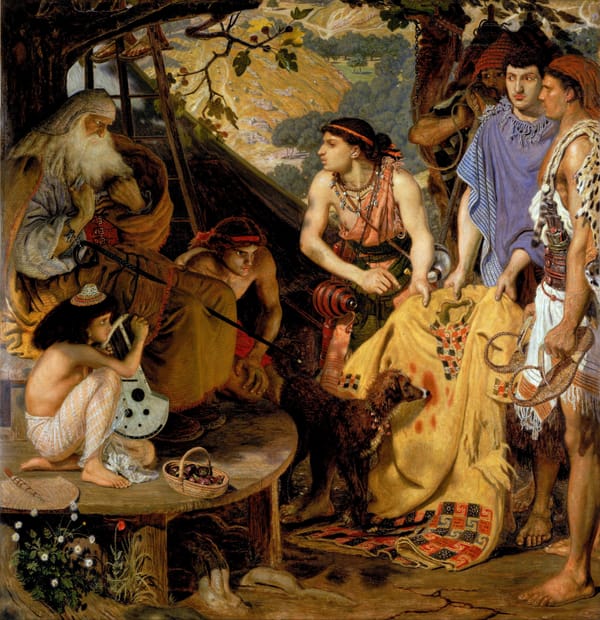
In the parsha Mikets, hunger is moralized. Paroy has prophetic dreams of seven healthy “handsome” cows and seven emaciated “ugly” cows. Yōsef correctly predicts that after seven years of abundance, the world will be ravaged with seven years of famine. The text makes an aesthetic judgement on health and implies that famine is a tool to create desirable character outcomes.
Hunger is an ironic punishment for Yaakov, who withheld food from his brother Eyso as a young man and coerced him to sell his birthright (Toldos). The ordeal of securing food is vengeance too for Yōsef’s brothers for putting him in the pit and selling him into servitude (Vyeshev).
Bereshis 42:21
It’s a tidy narrative: hunger is punishment. Hunger also functions as proof that Yōsef is a man of G-d and an accurate dream interpreter, making him a more formidable character. This is no consolation to the unnamed masses of starving people across the famished ancient world, nor a comfort to hungry readers who turn to Torah for spiritual guidance. The lesson of hunger in the text is that Hashem creates famine because someone—maybe you, maybe not—needs to learn a lesson from it.
Hungry people are not ugly, but hunger is. To let people go hungry is an insult to life and a stain on our souls.
The effects of hunger are disabling before they are fatal: diabetes, high blood pressure, heart disease, weakened immune system, stunted growth in children, infertility, decreased cognitive function, slow heartbeat, high temperature, shallow and slow breathing, low bone density, fat loss, and finally muscle loss. Even if people recover from starvation, they face chronic health and mental health problems as a result: issues with their immune and circulatory system, disordered eating, and PTSD. The stress of hunger also contributes to psycho-physical problems like anxiety and depression. Food scarcity causes and reinforces social isolation. Hungry people must make difficult choices about feeding themselves at the expense of their other basic needs like heat and medicine. Of course, this is what hunger does to otherwise healthy people—comorbidity with other medical issues only compounds the devastating effects.
We are challenged by Torah to engage with the text as both parable and literal—we must imagine that the famine across Yōsef’s world was a metaphor and a historical event. The narrative provides some details about the emotional effects of hunger and desperation on our ancestors, but not the physical consequences. For that we can turn to more recent history.

The Warsaw Ghetto Hunger Study remains the largest medical study of starvation. The ghetto held more than 400,000 prisoners. Faced with the impossibility of treating hunger with food due to the Nazi blockade, the ghetto’s doctors (led by Dr. Izrael Milejkowski) decided to study starvation in an act of optimism that their work might provide humanitarian benefit. They began preparing in November 1941 and started studying in earnest in February 1942.
This is the end of the public preview for four weeks. Sign up for $5 a month to read the full dvar.
Money shouldn't a barrier to accessing writing, art, and culture. If $5 a month isn't sustainable for you, please email me and I'll send you the link to sign up for free.
If you can afford it, please consider signing up and supporting.